
Interior

What Are Screw Piles & How Do They Work? 1024 768 admin

What Are Screw Piles & How Do They Work?

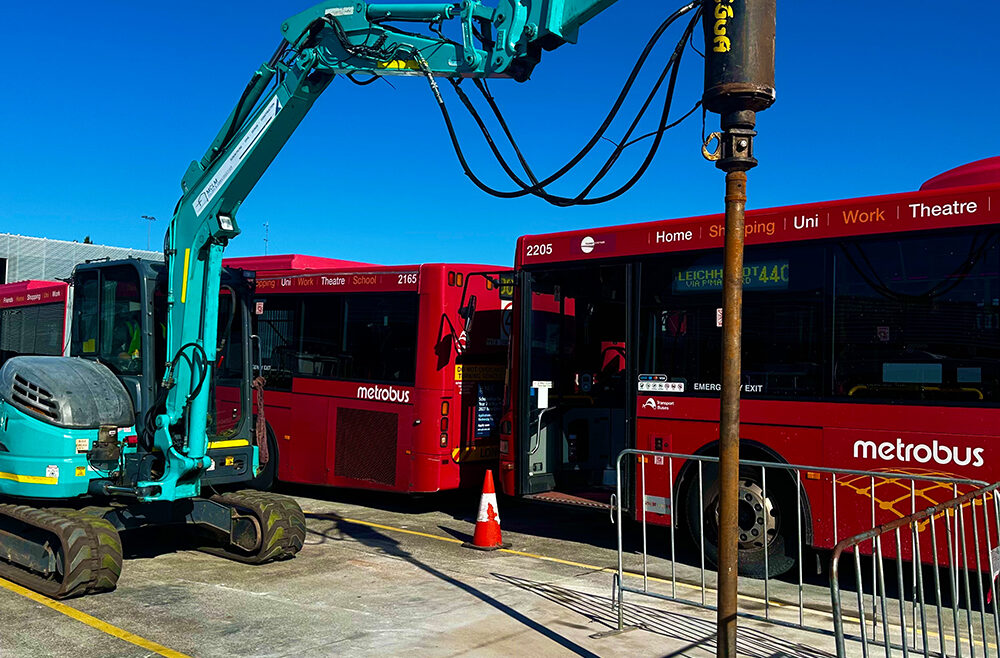
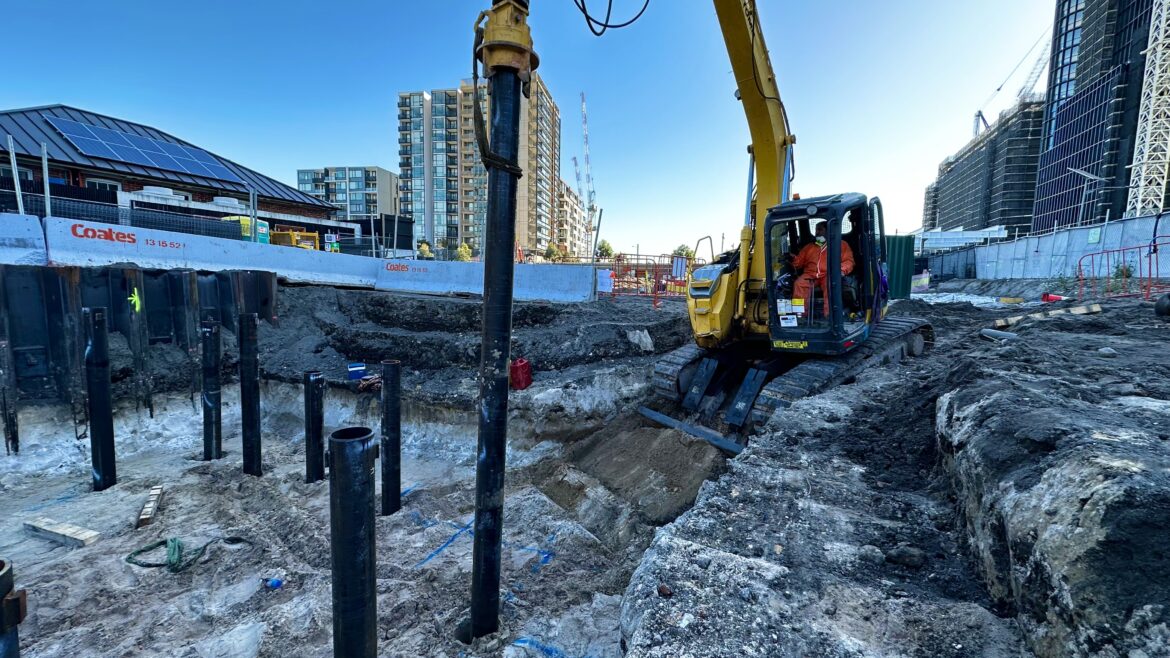
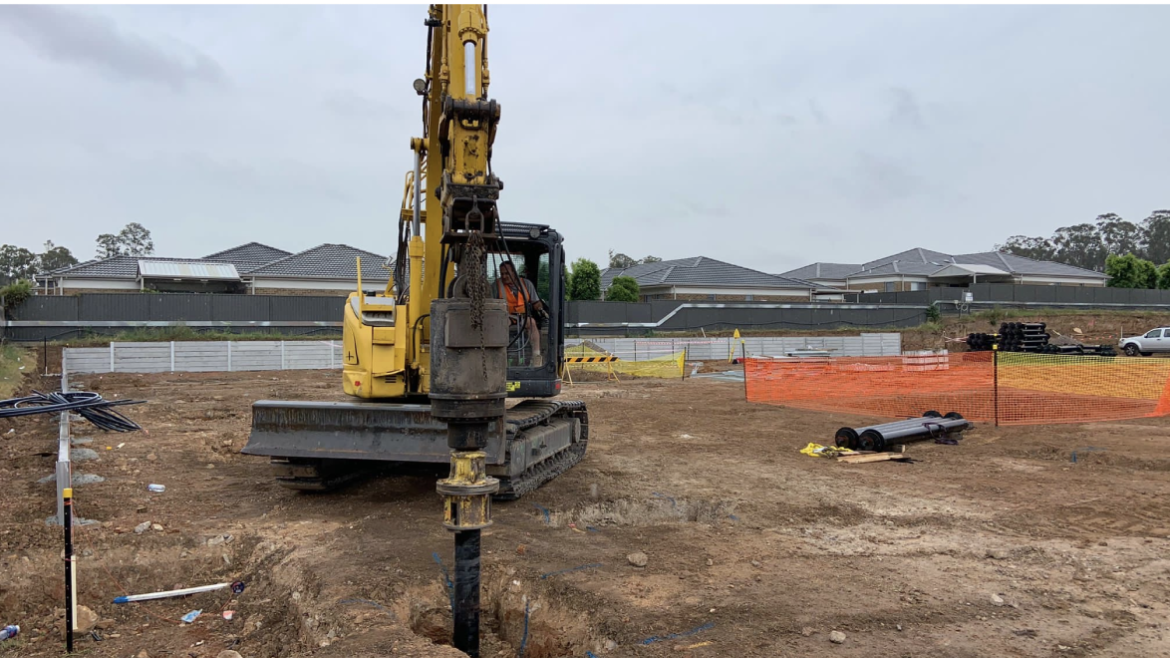
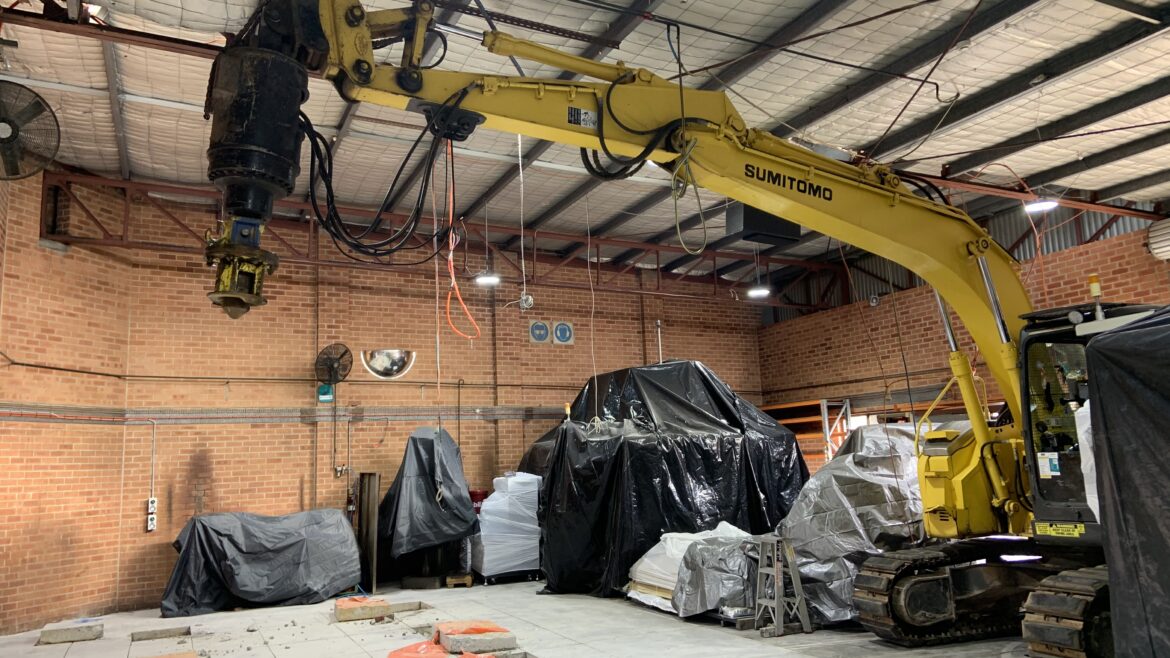
Screw piles are steel foundation elements installed by controlled rotation—think of a giant screw advancing into the ground. Each pile has a helical section at the toe that “bites” into competent soil. As the pile turns, the helix mobilises end-bearing and, with our multiturn helix design, compacts the surrounding soil to create a pressure bulb that spreads load efficiently. Capacity is confirmed in real time through the installation torque achieved in the target layer, so piles can be loaded immediately—no curing, minimal spoil, and low noise or vibration. This makes screw piles ideal for tight, live or environmentally sensitive sites where speed, cleanliness and predictability matter.

Why Screw Piles Are So Effective

Speed & program certainty: Rotary installation with no curing time keeps builds moving.

Clean delivery: Little to no bulk excavation or spoil, fewer truck movements, tidier sites.

Low disturbance: Low noise and essentially vibration-free, protecting neighbours and services.

Adaptable capacity: Installation torque correlates with pile capacity, so designs can be verified on site.

Multiturn advantage: Our conical, multi-flute helix forms a pressure bulb, often achieving required capacity at shallower depths and penetrating shaly/rocky horizons with less pre-drill.

Where Screw Piles Excel (Applications)

From small additions to major infrastructure, screw piles cover the lot: residential dwellings and extensions, retaining walls and decks, solar and light poles, warehouses and logistics, schools and aquatic centres, high-rise/mixed-use towers, government facilities, boardwalks, bus depots and parking structures. With pile solutions from 50 kN to 2,000 kN, MCLM scales capacity to suit the ground and the load.

What Controls Performance?

Soil profile: Sands, clays, silts and mixed fills respond differently; the goal is seating the helix in the right stratum.

Moisture & groundwater: Wet conditions change resistance; screw piles still install reliably without de-watering.

Helix geometry: Multiturn helix increases effective bearing area via the pressure bulb.

Depth & embedment: Capacity comes from reaching the layer that delivers the design torque window.

Installation quality: Calibrated torque, correct crowd/rotation, verticality, and documented hold-points.

Sustainability & Site Impact

Screw piles minimise excavation, cart-away and disturbance. Fewer truck movements and a smaller laydown footprint reduce fuel use and emissions. Piles can be removed or extended if design changes, making them a more environmentally responsible alternative to deep excavations and wet concrete works.

How MCLM Delivers Screw Piling Done Right

We handle the process end-to-end—engineering, fabrication, and installation—so accountability is clear and QA is tight. Before production, we can run DCP testing and test piling to forecast founding depths. During installation we record torque–depth logs for every pile; where specified, we prove performance with static load testing (compression/uplift). Our multiturn helix piles are manufactured and welded to stringent standards, and we supply full QA packs and engineer certification on completion.

FAQs (Straight Answers)

How do screw piles carry load?

Primarily through end-bearing at the helix; our multiturn helix also compacts soil to form a pressure bulb that distributes load efficiently. Torque achieved during install confirms capacity.

Do they work in wet or variable ground?

Yes. Rotary installation is largely weather-independent, effective in high water tables, and needs no de-watering. In mixed strata, test piling and real-time torque control keep outcomes predictable.

How quickly can we build after installation?

Immediately. There’s no concrete curing, so superstructure works can proceed as soon as piles are installed and signed off.

What if the expected depth changes on site?

We add extensions via couplings and continue to the torque window in the correct layer. This is planned for in our hold-points and QA process.

What capacities can MCLM provide?

We deliver working solutions from 50 kN to 2,000 kN, matched to your loads, ground conditions and program.

Piling codes/ Compliance( Quality Control)

  • All Multiturn helix are manufactured in Welded Cast Steel to ASTM WCB 216 Grade and come with NATA certified Test Certificates for Chemical Composition, Tensile Testing and Dimensional Tolerance Testing. 
  • All Pipe is API 5L/AS-1163 C350 350+ Grade Black Steel
  • AS 2159-2009 Piling code
  • Welding specifications and procedures as specified in AS1554 WPS
  • All MCLM Fabricators are ISO 9606 Qualified
  • ISO 9001 Quality Management System
Why Hire Professional Screw Piling Contractors? 1000 1000 admin

Why Hire Professional Screw Piling Contractors?

…and why a strong foundation decides everything


A project only performs as well as the ground it stands on. A well-designed, correctly installed foundation manages load paths, controls settlement, and protects the structure for decades. With screw piles, that outcome depends on more than a product,it depends on the people, process, and proof behind the install. Professional screw piling contractors bring in-house engineering, calibrated tooling, trained operators, and documented QA so every pile seats in the right layer at the right torque, delivering predictable capacity and program certainty.

What a specialist adds (beyond “just installing piles”)

Design integration: Engineers translate loads and geotech into the correct shaft, helix, and depth targets.

Depth confidence: DCP/test piling establishes realistic founding levels; real-time torque–depth logging verifies capacity as you install.

Tight tolerances: Verticality, embedment, cut-off and welding are controlled to spec, preventing rework at superstructure stage.

Program & site control: Rotary installation with no curing time keeps trades moving; low noise/vibration suits live, tight, or sensitive sites.

Full QA trail: As-builts, torque/depth logs, WPS to AS/NZS 1554, and compliance with AS 2159—so approvals are faster and risk is lower.

Safety, compliance, and certainty

Professional crews operate under documented ITPs and hold points, use calibrated torque equipment, and keep traceability on steel and helix components. Where required, static load testing confirms the design model on representative piles. The outcome is a foundation you can certify with confidence—no guesswork, no hidden liabilities later.

Why this matters to your build

Screw piles installed by specialists reduce unknowns: fewer weather delays, no bulk spoil, minimal disruption to neighbours and services, and immediate load-up so the program stays on track. That’s cost control you can measure in days saved, variations avoided, and defects that never appear.

How MCLM delivers

We own the process end-to-end—engineering, fabrication, and installation—so accountability is clear. Before steel hits site, we confirm ground with DCPs or test piles, then install with multiturn helix piles to the specified torque window. Every pile is logged, inspected, and signed off; where needed, we prove capacity with static testing. With a modern fleet and experienced crews, we routinely deliver working loads up to 2,000 kN, matching the demands of residential additions through to major commercial and public projects.

FAQs (screw-pile specific)

What makes a “good” screw-pile foundation?

Reaching the correct bearing layer and hitting the design torque window, with installation recorded and certified. That combination gives reliable compression, uplift, and lateral performance.

How do professionals reduce depth-related surprises?

By front-loading investigation (DCP/test piling), using calibrated torque systems, and enforcing install tolerances. If ground varies, we extend and continue to the torque window—no guesswork.

Is screw piling suitable for tight or live sites?

Yes. Rotary installation is low noise, essentially vibration-free, and produces no bulk spoil—ideal around services, neighbours, schools, and operating facilities.

What proof do I receive at handover?

An engineer-certified QA pack: torque/depth logs for every pile, as-builts, material traceability, and welding to AS/NZS 1554; designs and installation aligned with AS 2159.

When is load testing recommended?

On higher-risk or higher-load projects, or where ground is variable. Static compression/uplift tests on representative piles validate the capacity model and de-risk production.

Why choose MCLM instead of a general contractor?

Because we specialise in screw piles. Our multiturn helix system, in-house engineering, and documented QA deliver capacity and schedule certainty—foundations ready to build on, first time.

How Does Incorrect Pile Depth Affect Different Piling Methods? 1024 768 admin

How Does Incorrect Pile Depth Affect Different Piling Methods?


Getting screw-pile depth right isn’t a “nice to have”,it’s fundamental to capacity, serviceability, and cost control. For screw piles (especially multiturn helix designs), “correct depth” means advancing to the target bearing stratum and achieving the required installation torque that correlates with design capacity. Stop short and the helix hasn’t fully engaged competent ground; go too far and you risk over-torque, damage, or simply paying for unnecessary pile length that doesn’t improve performance. This article explains how depth errors show up on screw-pile projects, why they matter, and how MCLM prevents them.

What the “correct depth” means for screw piles:

Screw piles carry load primarily through the helix bearing on competent soil (and, with multiturn helixes, through a compacted pressure-bulb of soil around the helix). The design specifies a target torque and embedment in a specific layer. When you reach that layer and hit the torque window, you’ve matched the geotechnical model and design assumptions—capacity, settlement, and uplift resistance line up with what the engineer signed off.

If piles are too shallow:

  • Under-capacity: The helix hasn’t seated in competent soil; measured torque is low, so compression and uplift capacities fall short.
  • Excess settlement or uplift movement: Inadequate end-bearing leads to vertical movement under service loads.
  • Poor lateral stiffness: Shallow embedment reduces lateral resistance at headworks and frames.
  • QA non-conformance: Torque/depth logs won’t meet the hold-point requirements; piles may need to be extended or reinstalled—adding time and cost.

If piles are too deep:

  • Over-torque and damage risk: Driving beyond the target layer can spike torque, risking helix distortion, shaft torsional yield, or coupler stress.
  • Misaligned load-transfer zone: Passing the intended stratum can push the helix into transitional or unsuitable material, reducing the predictable link between torque and capacity.
  • Unnecessary cost/time: Extra steel, extra turns, and more machine hours without meaningful capacity gain.
  • Set-out & level complications: Incorrect cut-off levels create issues for caps, baseplates and slab RLs—leading to packing, rework, or redesign.

Why incorrect depth happens on screw-pile jobs:

  • Variable ground not captured by desktop data (fill lenses, boulders, weathered rock, soft seams).
  • Gaps in investigation (limited boreholes, no DCP on critical lines).
  • Calibration issues (torque sensor drift, incorrect tool factors) or operator error (crowd/rotation habits, reading logs).
  • Obstructions that cause false refusal or deflection off line.
  • Rushing the hold points—installing to a depth number instead of the torque window.

How we control depth at MCLM:

Depth isn’t a number you “pick”—it’s where design torque is achieved in the right layer. In sands and stiff clays, our multiturn helix compacts soil to form a pressure bulb, delivering high end-bearing at relatively shallow embedment. In heterogeneous fill, shaly horizons or boulder fields, we plan for test piling, potential pre-drill in localised zones, or change-out of tooling to ensure the helix seats correctly without damage.

DCP testing (pre-install): We map penetration resistance across key lines to anticipate founding depth and confirm strata changes.

Test piling: We mobilise with couplings and extensions, install a trial pile to refusal/torque window, and produce torque-depth curves that set realistic production lengths.

Real-time torque & depth logging: Every pile is recorded and checked against the design envelope and hold-points.

Static load testing (as required): Compression and uplift tests verify the capacity model on representative piles.

Strict tolerances: Verticality, embedment, torque window, and cut-off levels are controlled and documented; non-conformances trigger immediate corrective actions (e.g., extensions).

Engineer certification & QA pack: As-builts, torque/depth logs, ITPs and sign-offs provide traceability and assurance.

Telltale signs a screw pile isn’t at the right depth

During install: Torque fails to rise as expected; sudden refusal at low torque; excessive turns without reaching the window.

After install: Unexpected settlement, uplift “slack,” or lateral softness; proof tests that don’t meet criteria; head levels out of tolerance.

Frequently Asked Questions

How do you know a screw pile has reached the right depth?

We install to a defined torque window in the correct bearing layer. Live torque–depth logging confirms the pile has engaged competent strata; we then record setout, verticality, and cut-off to close the QA loop.

What if the pile stops short of the target layer?

If torque is low or the layer hasn’t been reached, we add extensions via couplings and continue advancing until the design torque is achieved. We re-verify against the hold-point criteria before sign-off.

What are the red flags that depth isn’t right?

During install: torque fails to rise as expected, sudden refusal at low torque, or excessive turns with no torque increase. After install: atypical settlement or uplift movement, or proof tests outside acceptance criteria.

If depth is off, do piles have to be replaced?

Usually not. Shallow piles are extended and re-driven to the torque window. Slightly over depth may be accepted with engineering review if torque, verticality, and cut-off remain within tolerance and capacity is confirmed. In addition extra piles can be added to take the additional loads present from the increased depth.

Foundation Assurance: Expert Screw Pile Testing Solutions by MCLM Group 1024 567 admin

Foundation Assurance: Expert Screw Pile Testing Solutions by MCLM Group

Optimising Foundation Solutions with MCLM Group’s Screw Pile Testing

When embarking on a construction project, be it residential or commercial, selecting the appropriate screw piles is crucial. MCLM Group specialises in providing sturdy screw pile solutions tailored to the unique demands of your project. Our expertise in ground screws and helical screw piles guarantees that your structures remain steadfast under any conditions.

Expertise in Site-Specific Screw Pile Analysis

Our team is adept at conducting comprehensive, site-specific screw pile tests. We boast a proven track record in testing to remarkable depths, beyond 16m, and managing loads of up to 500kN per screw pile. Our versatility in adapting to various challenging locations and ground types sets us apart, ensuring foundations that meet the precise requirements of your project.

Tailored Testing for Project Precision

Following Australian standards, MCLM Group’s approach to screw pile testing is thorough. We offer an extensive range of screw piles, each tailored to the specific demands of your project and your structural engineers’ specifications. Our testing capabilities include recording significant compression values and tensile forces, providing accurate data for specific load targets or failure tests.

In-Depth Analysis for Robust Foundations

Understanding the specific requirements and anticipated foundation loadings of your project is our priority. We organise a detailed programme to install and test screw piles, reaching the necessary depths for load-bearing strata. Our testing process involves meticulous monitoring of deflection on the screw piles, recording data in precise increments. This rigorous methodology ensures that we provide a foundation solution that is not only reliable but also customised to the exact needs of your project.

Comprehensive Reporting for Informed Decision Making

After testing, we deliver an extensive report detailing our findings. This report includes vital data on torques versus depths and specifies the ideal screw pile foundation solution. This level of detail ensures that your project is supported on a foundation that is safe and optimised for its unique requirements.

Customised Testing for Diverse Project Needs

The importance of testing to understand the load-bearing capacity of screw pile foundations is paramount, especially in varying ground conditions. Whether dealing with soft, sandy, silty soils, or considering additional forces such as wind and earthquakes, our testing is crucial for large-scale projects. We ensure that structures, from housing and infrastructure to bridges and transmission towers, receive the engineer-specified groundworks and loading values they require.

Ensuring Stability Across All Structures

Our tensile testing is particularly vital for structures with large surface areas exposed to uplift forces, such as raft slabs, light poles, and transmission towers. In these scenarios, our testing provides invaluable insights, especially in wind-exposed locations, guaranteeing the stability and safety of your project.
MCLM Group is committed to providing customised, rigorous screw pile testing and foundation solutions, ensuring the stability and longevity of your construction projects.

Request a Test

    Full Name (required)

    Subject

    Mobile (required)

    Email(required)

    Message