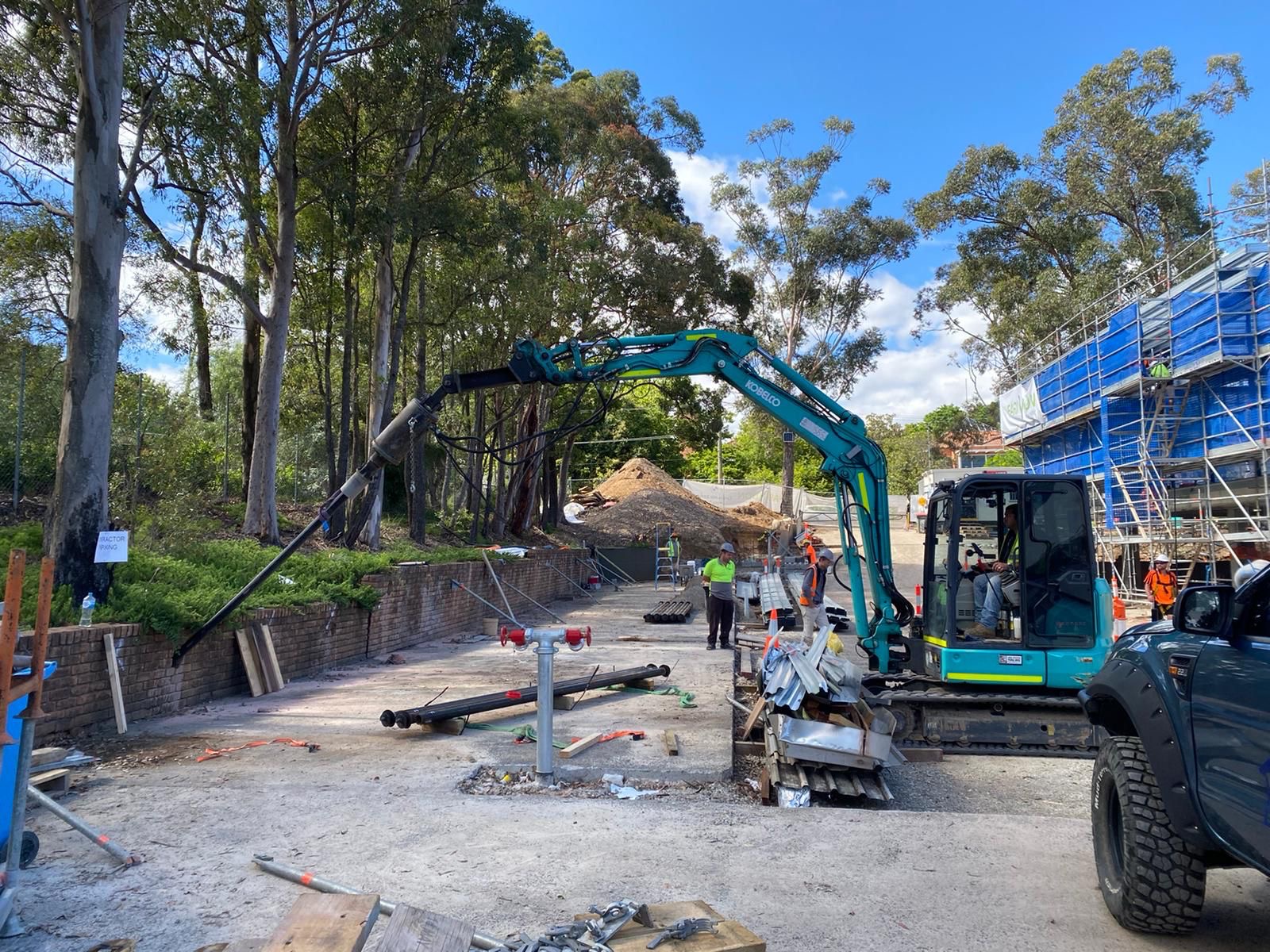


Screw piles are steel foundation elements designed to be installed into the ground by a rotary process, similar to a screw being driven into timber. Unlike traditional driven piles, screw piles create minimal vibration, produce little to no spoil, and can be installed rapidly with precision. The helical section at the toe of the pile anchors into competent soil layers, transferring structural loads directly into stable strata. Because installation does not rely on curing time or heavy excavation, loads can be applied immediately after installation. This makes screw piles ideal for projects requiring speed, efficiency, and reliability in a wide variety of ground conditions — from residential builds to large-scale infrastructure. Their versatility, cost-effectiveness, and ability to perform in confined or difficult access areas have made screw piles a trusted alternative foundation solution across Australia.
What Are Multiturn Helixes?
Our multiturn helix is a one-piece cast steel helical system welded directly to the pile shaft. Unlike single-turn plate helices, the multiturn helix uses multiple flutes in a conical shape to compact soil as it advances. This action forms a “pressure bulb” within the soil, which spreads the load uniformly and significantly increases capacity. Testing has shown that multiturn helices can perform up to 1.75–2.2 times more efficiently than single-turn plate helices of the same diameter. By engaging dense sands, clays, or rock at shallower depths, the multiturn helix delivers stronger end-bearing capacity, reduces installation time, and eliminates the need for pre-drilling in most soils.
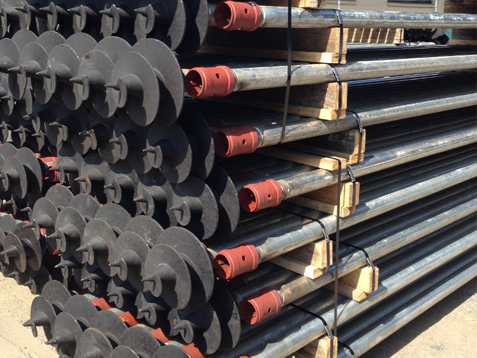
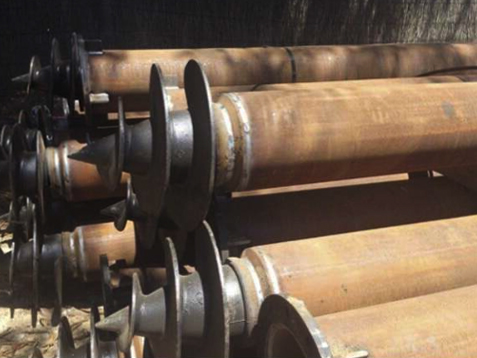
Advantages of Multiturn Helixes Over Plate Helixes
- Greater geotechnical contact area due to the pressure-bulb effect, resulting in higher load capacity.
- Equal performance in uplift (tension) and compression (downward) loads at minimum depths.
- Full structural shaft capacity achieved via butt-welded joints, unlike plate helices that rely on fillet welds.
- Superior penetration into rocky, shaly, or hard soils with less need for pre-drilling.
- Faster installation with minimal vibration and noise, suitable for sensitive environments.
- Minimal spoil and disturbance — ideal for contaminated or high water table sites.
- No curing time required — loads can be applied immediately after installation.
- Resistant to bending or folding, unlike plate helices which can distort under high load.
- Consistent quality and performance due to cast steel manufacturing rather than welded plates.
- Reduced project time and costs while maintaining high safety and quality standards.
Typical CHS Section
MCLM provides a wide range of multiturn screw piles to suit projects of every scale and ground condition. We install piles from 50 kN to 2000 kN, covering applications across residential, commercial, industrial, and government sectors.
76.1 x 5.0mm CHS | 101.6 x 4.0mm CHS | 88.9 x 5.5mm CHS | 114.3 x 4.8mm CHS | 114.3 x 6.0mm CHS | 168.3 4.8mm CHS | 168.3 6.4mm CHS
| 177.8 x 8.2 mm CHS | 219.1 x 8.2 mm CHS | 219.1 x 12.7 mm CHS | 273.1 x 9.3 mm CHS | 273.1 x 12.7 mm CHS | 323.9 x 9.5mm CHS | 323.9 x 12.7mm CHS
This full range ensures we can tailor foundation solutions to everything from small dwellings and retaining walls to large-scale infrastructure, stadiums, and government facilities.